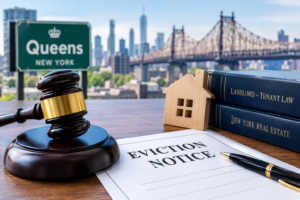


How Long Does an Eviction Take in Queens, New York?
FREE CONSULTATION Call us now at (718) 514-7900 If you are a landlord dealing with a tenant who has stopped...
Learn More
When someone types “How long before property is considered abandoned in New York” into a search bar, they usually want a simple answer. Maybe a tenant disappeared, left furniture and mail, and has not paid rent. Maybe you are the tenant, and you moved out in a hurry, and now you worry about your things.
Here is the hard truth. New York law does not give one magic number of days for every situation. Abandonment depends on facts, notice, and what the parties do next. That is exactly why these cases turn into lawsuits so often.
This article walks through how New York treats “abandoned” rental units and belongings, what landlords should do, and how tenants can protect themselves. It is information, not individual legal advice. For real answers on your exact situation, you should speak with a New York eviction lawyer.
Key Takeaways
The short legal answer is uncomfortable. There is no single statewide rule that says “after X days, a unit is abandoned.”
Instead, New York relies on:
When courts or agencies decide if a tenant abandoned a unit, they usually look at:
So “How Long Before Property Is Considered Abandoned in New York” is less about a calendar and more about a pattern. The longer the unit sits empty with no rent and no contact, the stronger an abandonment argument becomes.
At the same time, acting too early can expose a landlord to claims of illegal eviction or conversion of property. That balance is where legal advice matters.
Think in terms of three buckets:
New York courts tend to treat a place as abandoned only when several signs line up, for example:
There is still no official “30 days” or “60 days” rule for every case. Some guidance in New York law uses three months in other abandonment contexts, such as abandoned dwellings, where an owner fails to collect rent or maintain a building.
However, that statute deals with abandoned buildings, not everyday apartments that some tenant left last week. It shows that lawmakers treat three months of inaction as a serious signal, but it is not a blanket rule for all leases.
The second bucket is the couch, clothes, boxes, and random kitchen items sitting in the unit. New York does not have one detailed statewide statute that tells landlords exactly how many days they must hold these items in every case. Many rights and duties come from:
Best practice for many landlords includes:
Some guidance and commentary suggest 30 days as a common storage window before treating items as abandoned, especially after written notice. That number comes from practice, not a single New York statute that covers every case.
If a landlord reasonably concludes the tenant abandoned the unit, New York Real Property Law 227-e requires the landlord to mitigate damages. That means they must take reasonable steps to re-rent the apartment instead of letting it sit empty and charging the former tenant for the full remaining lease term.
At the same time, General Obligations Law 7-108 requires specific handling of security deposits, including an itemized statement and return of any remaining amount within 14 days after the tenant vacates.
Those deadlines and duties often interact with abandonment disputes. If a landlord mishandles either one, they can lose the right to keep the deposit or face claims.

This is the trap many landlords fall into. The answer is almost always no. At least, not without a process.
If you misjudge How Long Before Property Is Considered Abandoned in New York and rush to toss belongings or change locks, you risk claims for:
A safer approach usually looks like this:
Courts often ask one question. Did the landlord act reasonably and in good faith based on the information they had? If the answer looks like “not really,” the landlord’s risk increases.
Tenants also have responsibilities in this story. Many disputes start because a tenant leaves quickly, then returns weeks later, angry that “everything is gone.”
To avoid that, tenants should:
If you left belongings behind, do not wait months. Reach out in writing as soon as possible. Silence can look like surrender.
Abandonment problems rarely stay simple. They often mix:
Flatrate Eviction Lawyer steps in to untangle those pieces.
For landlords, we:
For tenants, we:
Because we work on a flat-rate model in many matters, you know the legal costs up front. That helps when cash flow is already tight due to vacancy or moving expenses.
If you are still wondering “How Long Before Property Is Considered Abandoned in New York”, you are already in the danger zone. Guessing here can get expensive fast, for both landlords and tenants.
Flatrate Eviction Lawyer can review your lease, your timeline, and your evidence. We then explain your options in plain language and help you choose a strategy that fits your risk and goals.
Contact Flatrate Eviction Lawyer today to schedule a consultation. We will help you handle suspected abandonment, protect your rights, and move forward with a clear plan instead of cross-your-fingers hope.
Our experts regularly author articles and create other forms of publication and commentary on important legal matters and policy developments. Here are some of the latest publications from our legal experts.