

Eviction Notices in New York: What Landlords Need to Know Before Starting a Case
FREE CONSULTATION Call us now at (718) 514-7900 For New York landlords, starting an eviction case requires more than simply...
Learn More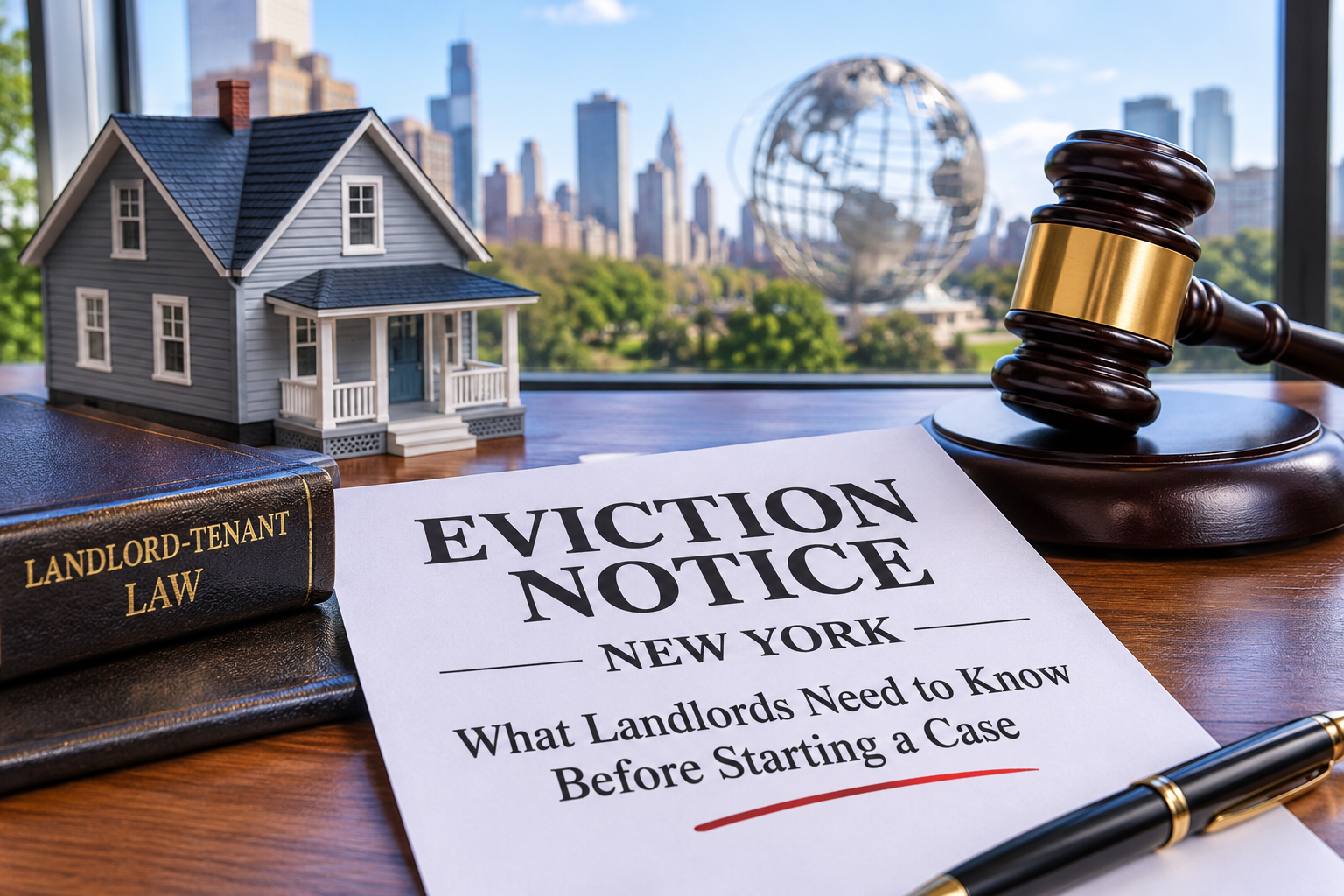
For New York landlords, starting an eviction case requires more than simply asking a tenant to leave. Before filing a case in Housing Court, landlords must follow specific legal procedures, including serving the correct notices when required by law.
Understanding the eviction notice requirements in New York can help property owners avoid unnecessary delays, legal complications, and costly mistakes.
The type of notice required depends on the circumstances of the case. Common examples include:
The required notice period and language depend on the tenancy, the reason for eviction, and applicable New York laws.
Even if a landlord prepares the correct eviction notice, improper service can create problems. New York law has specific requirements regarding how notices must be delivered. Failure to follow these requirements may result in delays or dismissal of an eviction case.
Landlords should avoid changing locks, removing tenant belongings, shutting off utilities, or attempting to force a tenant out without following the legal process. In New York, landlords generally must obtain the appropriate court judgment and warrant and have the eviction carried out by an authorized enforcement officer.
Eviction proceedings in Queens and throughout New York can involve strict deadlines, notice requirements, and court procedures. A mistake at the beginning of a case can cost landlords valuable time and money.
If you are a landlord dealing with a nonpaying tenant or a tenant who refuses to vacate, consulting an experienced New York eviction lawyer can help you understand your legal options and the proper steps to take.
Need Help With an Eviction in Queens, NY?
Flat Rate Eviction provides legal services for landlords dealing with eviction and landlord-tenant matters in New York.
Contact us to discuss your situation.
A: You should hire a lawyer immediately if you receive court papers, face an eviction, or have a lease dispute. Waiting to get counsel often limits your options and leads to default judgments.
A: Yes, an attorney can negotiate settlements, draft demand letters, and resolve lease issues out of court. Most housing disputes are settled through structured negotiations before a trial is necessary.
A: Bring your signed lease agreement, rent ledgers, written notices, date-stamped photos, and all written communications. Having these documents ready allows your lawyer to evaluate your case accurately.
A: Look for a lawyer with specific experience in the Queens County Civil Court and transparent fees. Verify their knowledge of local NYC rent stabilization codes and read recent client reviews.
A: Absolutely, getting legal advice early prevents costly filing mistakes and protects your statutory rights. Early intervention is the best way to resolve the dispute quickly and avoid court.
Our experts regularly author articles and create other forms of publication and commentary on important legal matters and policy developments. Here are some of the latest publications from our legal experts.