

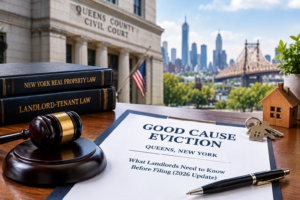
Good Cause Eviction in Queens: What Landlords Need to Know Before Filing (2026 Update)
FREE CONSULTATION Call us now at (718) 514-7900 If you own rental property in Queens, the rules for ending a...
Learn More
If you own rental property in Queens, the rules for ending a tenancy have changed, and the courts are still figuring out how to apply them.
Since 2024, New York’s Good Cause Eviction Law (GCEL) has reshaped how landlords across Queens and the surrounding counties approach lease non-renewals, rent increases, and eviction filings. If you haven’t updated your process, you could be walking into housing court unprepared.
Before GCEL, a landlord with an unregulated, market-rate unit could simply decline to renew a lease at term’s end — no reason required. That’s no longer true for most covered units. Landlords now generally need a recognized “good cause” to end a tenancy: nonpayment, lease violations, wanting to occupy the unit themselves, or a handful of other statutory grounds.
GCEL doesn’t cap rent increases outright — but it flips the burden of proof. If you raise rent above the local threshold (roughly 8.8%, adjusted annually by HPD), you must be prepared to justify that increase as reasonable if the tenant challenges it. Skip this step, and a nonpayment case built on an unjustified increase can collapse in court.
Every lease, lease renewal, and predicate notice must now include a Good Cause Eviction Law Notice — stating whether the unit is covered, and if not, why it’s exempt (small building, co-op, certain new construction, etc.). Missing this notice is one of the fastest ways to derail an otherwise valid case.
Good Cause is still new, and Queens Housing Court is actively shaping how it works in practice. Judges have been willing to scrutinize rent increases closely, and settlements — not litigation — are increasingly how these disputes resolve, since fighting a Good Cause claim in court is costly with an uncertain payoff.
Before you file, or before you send a non-renewal notice, confirm three things: (1) is your unit exempt or covered, (2) does your notice meet the statutory requirements, and (3) can you document a legitimate reason if GCEL applies. Getting this wrong up front means losing time and money in court.
Facing a tenant dispute or unsure if your property is covered under Good Cause? Contact our office for a case review before you file.
A: You should hire a lawyer immediately if you receive court papers, face an eviction, or have a lease dispute. Waiting to get counsel often limits your options and leads to default judgments.
A: Yes, an attorney can negotiate settlements, draft demand letters, and resolve lease issues out of court. Most housing disputes are settled through structured negotiations before a trial is necessary.
A: Bring your signed lease agreement, rent ledgers, written notices, date-stamped photos, and all written communications. Having these documents ready allows your lawyer to evaluate your case accurately.
A: Look for a lawyer with specific experience in the Queens County Civil Court and transparent fees. Verify their knowledge of local NYC rent stabilization codes and read recent client reviews.
A: Absolutely, getting legal advice early prevents costly filing mistakes and protects your statutory rights. Early intervention is the best way to resolve the dispute quickly and avoid court.
Our experts regularly author articles and create other forms of publication and commentary on important legal matters and policy developments. Here are some of the latest publications from our legal experts.