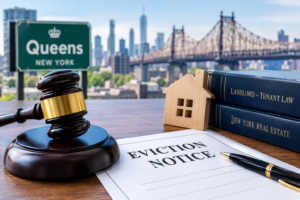


How Long Does an Eviction Take in Queens, New York?
FREE CONSULTATION Call us now at (718) 514-7900 If you are a landlord dealing with a tenant who has stopped...
Learn More
No one logs onto a search engine looking for a legal textbook. When a tenant stops paying rent or a landlord tries to force an illegal lockout, things get incredibly stressful very quickly. The reality on the ground is that New York real estate moves too fast for slow responses, and a single mistake in a housing court filing can set your case back by three solid months.
Navigating the local legal environment requires an understanding of specific rules and regulations. Whether you are dealing with structural maintenance issues in an Astoria pre-war building or managing a non-payment petition for a multi-family property in Flushing, having the right legal support changes everything.
Key Takeaways
A local property attorney handles the heavy lifting of drafting notices, filing state-mandated lawsuits, and representing your financial interests in local housing courts. The housing laws across the five boroughs are notoriously dense, meaning a single misstep can get your case thrown out by a judge. A qualified attorney protects your investment portfolio or your personal tenancy rights by acting as a shield against aggressive counterclaims.
The vast majority of property disputes stem from uncollected rental balances, broken lease terms, structural maintenance delays, and disagreements over security deposit returns. When communication breaks down completely, these issues turn into formal legal actions. The local housing market is hyper-competitive, which naturally heightens friction between property owners and renters when obligations are ignored.
Finding a reliable landlord and tenant lawyer near you becomes critical when these exact issues show up at your front door.
An experienced legal professional builds an airtight case by analyzing your lease framework, issuing valid statutory notices, and standing between you and the opposing party’s legal team. Here is the part most contractors and property owners won’t tell you: standard internet lease forms are completely useless in New York courts. Working with an attorney ensures your paperwork complies with the latest state updates and judicial interpretations.

Navigating the specific quirks of individual county courthouses requires an attorney who steps foot in those exact buildings every single week. A lawyer from upstate won’t understand how the clerks operate down here, plain and simple. Local legal experience means knowing the local court schedules, understanding how different judges rule on technicalities, and keeping up with municipal building codes.
A legal eviction requires serving a formal notice, filing a non-payment or holdover petition, winning a court hearing, and securing a formal warrant. Landlords cannot take matters into their own hands under any circumstances. Here is the reality on the ground: the legal process is a strict ladder, and you cannot skip a single rung without falling back to the bottom.
Here is a brutal truth: if you change a tenant’s locks, shut off their water, or drag their furniture out to the curb yourself, you have committed an illegal lockout. In our local courts, judges have zero tolerance for this behavior. They will fine you up to three times the tenant’s actual damages, order you to let them back in immediately, and ruin your legal standing. Always use the formal legal system, no matter how frustrated you are.
Choosing the right counsel means looking for explicit flat-fee pricing structures, hyper-local court experience, and an attorney who answers your calls directly. Avoid law firms that treat property disputes like minor side jobs. You need a dedicated advocate who understands that vacant rental properties represent massive financial losses every month.
Failing to act immediately, neglecting your property paperwork, and ignoring official court notifications will destroy your legal position. Time is your enemy in property management. The longer you wait to hand a non-paying file over to an attorney, the deeper the financial hole you will have to climb out of.
Leaving a property dispute to fix itself is a recipe for heavy financial loss. If you are exhausted due to unpaid balances, broken lease rules, or constant courtroom delays, you need a team that knows exactly how to clear the logjam. At Flatrate Eviction Attorney, we strip away the confusing hourly billing and deliver straightforward legal strategies designed to protect your investment and restore your peace of mind.
Don’t sit back while your property expenses pile up. Contact us to secure your future today. Call to establish control over your real estate assets with a premier landlord and tenant lawyer near me.
A: You should call an attorney the moment a tenant misses a payment deadline or violates a major lease term. Waiting too long allows rental arrears to climb to unrecoverable levels while your court options narrow down.
A: Yes, a specialized lawyer ensures your notices are served legally to prevent long procedural delays or sudden case dismissals. They manage all courthouse interactions to move your file through the backlogged calendar as efficiently as possible.
A: Bring your fully executed lease agreement, a complete rent payment ledger, copies of all texts or emails, and any notices already sent. Having these documents ready lets your attorney evaluate your case strengths instantly.
A: While many firms charge unpredictable hourly fees, we offer transparent flat-rate pricing structures for standard property cases. This approach allows you to plan your legal budget accurately without worrying about unexpected bills.
A: Attorneys who know local borough court clerks navigate specific filing rules and scheduling requirements far more effectively. This local familiarity keeps your case on the fast track while avoiding common clerical errors.
Our experts regularly author articles and create other forms of publication and commentary on important legal matters and policy developments. Here are some of the latest publications from our legal experts.